

The artificial intelligence revolution in franchising is no longer coming—it’s here. Major franchise brands like McDonald’s, Domino’s, and Taco Bell are already leveraging AI for everything from predictive analytics to automated customer service, creating competitive pressure for franchise owners across all industries. If you’re feeling overwhelmed by the technical aspects of AI implementation, you’re not alone. This comprehensive roadmap addresses the most common technical questions franchise owners face and provides actionable strategies for successful AI integration.
With 95% of businesses now implementing AI in at least one operational area, the question isn’t whether you should adopt AI, but how to do it effectively. This guide covers everything from choosing your first AI tools to integrating with existing franchise management systems, ensuring you can navigate the technical landscape with confidence.
Where Do I Even Begin with AI in My Franchise?
Starting your AI journey can feel overwhelming, but successful implementation follows a proven framework that thousands of franchises have used effectively.
Assessment and Planning Phase
Conduct an Operational Audit
- Document your current processes and identify repetitive tasks
- Analyze customer interaction points and communication bottlenecks
- Review existing technology infrastructure and integration capabilities
- Evaluate staff technical competency and training needs
Identify High-Impact Opportunities Focus on areas where AI can deliver immediate, measurable improvements:
- Customer service response times and availability
- Lead capture and follow-up automation
- Appointment scheduling and calendar management
- Local SEO and online reputation management
- Social media and website content
- Operational guides, sales guides and scripts
- Financial analysis and so much more
Franchise AiQ’s Sophia platform excels in these foundational areas, providing 24/7 customer service, intelligent lead re-engagement, and automated local SEO optimization that delivers results within 60-90 days.
Establish Success Metrics
Define Clear KPIs Before Implementation
- Response time improvements (target: 80% faster responses)
- Lead conversion rate increases (typical improvement: 15-30%)
- Customer satisfaction score enhancements
- Operational efficiency gains measured in time saved
Set Realistic Timeline Expectations
- Pilot program: 30-60 days for initial results
- Full implementation: 90-180 days across all locations
- Optimization phase: 6-12 months for maximum effectiveness
Choose Your Starting Point Strategy
The “One Location First” Approach Test AI implementation at your highest-performing location to:
- Validate results before system-wide rollout
- Train staff in a controlled environment
- Refine processes and workflows
- Build internal case studies and success stories
The “High-Impact Function” Approach
Focus on one critical business function across all locations:
- Customer service and phone handling
- Lead generation and follow-up
- Appointment scheduling and booking
- Local marketing and SEO optimization
What AI Tools Should I Implement First?
The key to successful AI implementation lies in choosing tools that deliver immediate value while building toward comprehensive automation. Based on industry data and client results, here’s the optimal implementation sequence.
Tier 1: Foundation AI Tools (Implement First)
AI-Powered Customer Service and Phone Handling
- 24/7 availability for customer inquiries
- Intelligent call routing and message taking
- Brand-consistent responses and information sharing
- Seamless handoff to human staff when needed
Customer service AI tools typically show ROI within 30-60 days through reduced missed calls, improved response times, and enhanced customer satisfaction scores.
Automated Lead Capture and Follow-Up
- Web form integration and immediate response systems
- Email and SMS sequence automation for new leads
- Dormant lead re-engagement campaigns
- Lead scoring and qualification processes
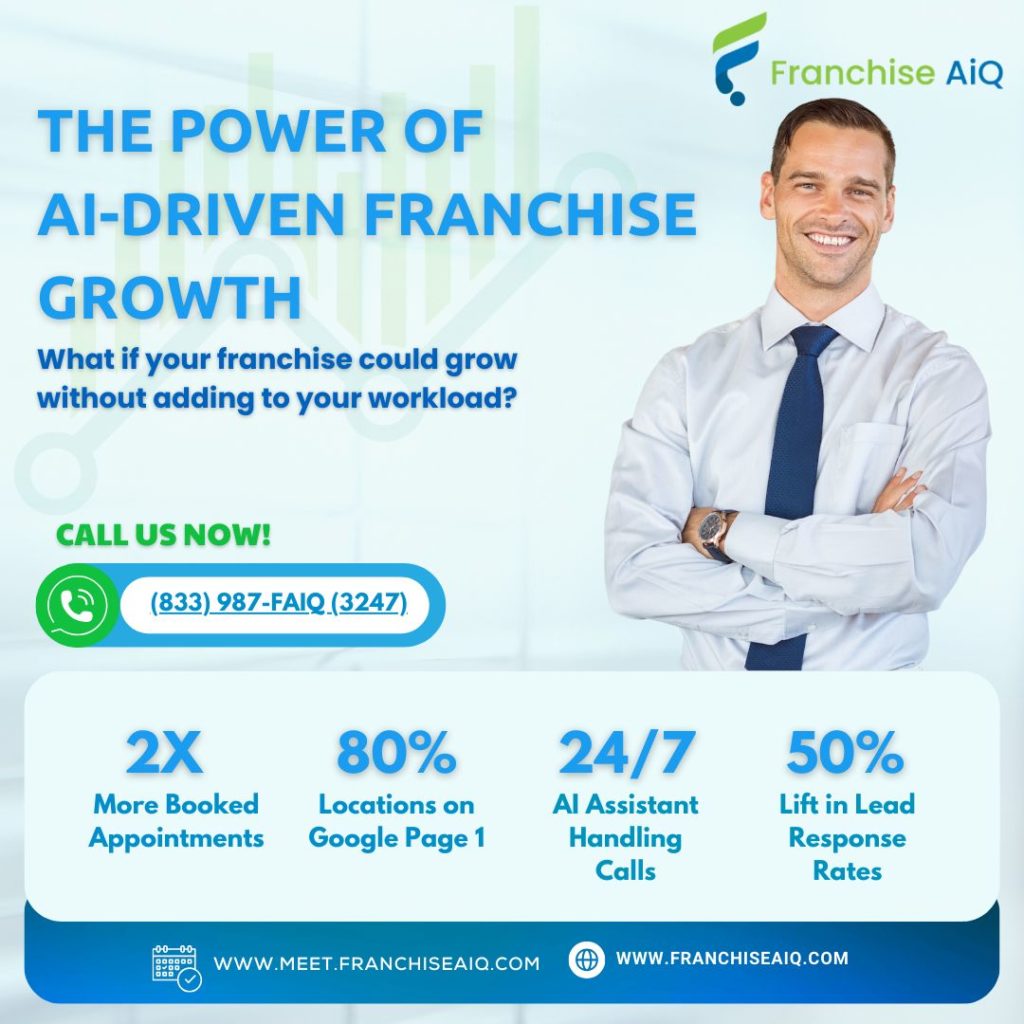
Franchise AiQ clients report 2X more booked appointments on active leads and up to 50% improvement in response rates within the first 90 days of implementation.
Appointment Scheduling and Calendar Management
- Online booking integration with existing calendars
- Automated reminder systems and rescheduling options
- Cancellation management and waitlist optimization
- Multi-location scheduling coordination
Tier 2: Operational Enhancement Tools (Implement Second)
Local SEO and Online Reputation Management
- Google Business Profile optimization across all locations
- Review response automation and reputation monitoring
- Local content creation and posting schedules
- Citation management and directory optimization
Basic Inventory and Resource Management
- Demand forecasting based on historical data
- Automated reorder alerts and supplier communication
- Waste reduction through predictive analytics
- Multi-location inventory optimization
Tier 3: Advanced Analytics and Automation (Implement Third)
Business Intelligence and Performance Analytics
- Multi-location performance comparison dashboards
- Customer behavior analysis and segmentation
- Revenue forecasting and trend identification
- Operational efficiency metrics and reporting
Advanced Marketing Automation
- Personalized customer journey mapping
- Dynamic pricing optimization based on demand
- Targeted campaign creation and management
- ROI tracking across all marketing channels
How Long Does It Take to Implement AI Across My Franchise Locations?
AI implementation timelines vary significantly based on complexity, scope, and preparation. Here’s what you can realistically expect based on industry benchmarks and successful implementations.
Phase 1: Foundation Setup (30-60 Days)
Week 1-2: Planning and Preparation
- Vendor selection and contract finalization
- Technical requirements assessment and infrastructure review
- Staff notification and initial training schedule development
- Data backup and security protocol establishment
Week 3-4: Pilot Location Implementation
- Initial system setup and basic configuration
- Staff training and onboarding processes
- Basic functionality testing and workflow optimization
- Performance monitoring and initial adjustments
Week 5-8: Pilot Optimization and Expansion Planning
- Performance analysis and system refinements
- Staff feedback integration and process improvements
- Multi-location rollout strategy development
- Success metrics validation and reporting
Phase 2: System-Wide Rollout (60-120 Days)
Multi-Location Deployment Strategy Most successful franchises implement AI across 3-5 locations simultaneously to:
- Maintain manageable training requirements
- Ensure adequate support resources
- Monitor performance across different location types
- Refine processes before final rollout
Expected Deployment Timeline by Franchise Size
- 2-5 locations: 60-90 days for complete implementation
- 6-15 locations: 90-120 days with phased rollout approach
- 15+ locations: 120-180 days with dedicated project management
Phase 3: Optimization and Integration (90-180 Days)
Advanced Feature Activation
- Complex workflow automation implementation
- Advanced reporting and analytics integration
- Custom functionality development and testing
- Cross-system integration and data synchronization
Performance Optimization
- Continuous monitoring and adjustment protocols
- Staff proficiency development and advanced training
- Customer feedback integration and system refinements
- ROI measurement and strategic planning for expansion
Do I Need Technical Expertise on Staff to Use AI Effectively?
Modern AI platforms are designed for business users, not technical experts. However, having the right support structure ensures optimal implementation and ongoing success.
Required Technical Competency Levels
Basic User Level (All Staff)
- Familiarity with web browsers and mobile applications
- Ability to follow simple training procedures and workflows
- Comfort with learning new software applications
- Basic troubleshooting skills for common issues
Administrative Level (Management)
- Understanding of basic system settings and configurations
- Ability to interpret performance reports and analytics
- Competency in user management and access control
- Skills in workflow optimization and process improvement
Advanced User Level (Optional)
- API integration knowledge for custom connections
- Database management and reporting capabilities
- Advanced analytics interpretation and strategic planning
- Technical troubleshooting and system optimization
Training and Support Strategies
Comprehensive Onboarding Programs Leading AI platforms like Franchise AiQ provide extensive training resources:
- Video tutorials and step-by-step guides
- Live training sessions and Q&A opportunities
- Ongoing support through dedicated success managers
- Regular system updates and feature enhancement training
Internal Champion Development Designate one staff member per location as the “AI Champion”:
- Receives advanced training and certification
- Serves as first-line support for location staff
- Communicates with vendor support teams
- Leads optimization efforts and best practice sharing
Vendor Support Requirements Choose AI providers that offer comprehensive support:
- 24/7 technical support availability
- Dedicated customer success management
- Regular training and optimization sessions
- Proactive monitoring and performance optimization
Can AI Integrate with My Existing Franchise Management Systems?
Modern AI platforms are built with integration in mind, designed to work seamlessly with the software systems franchises already use. However, successful integration requires careful planning and execution.
Common Franchise System Integrations
Point of Sale (POS) Systems
- Real-time transaction data synchronization
- Customer purchase history integration
- Inventory management and reorder automation
- Sales reporting and analytics enhancement
Customer Relationship Management (CRM) Systems
- Lead data synchronization and management
- Customer communication history tracking
- Automated follow-up sequence integration
- Customer segmentation and targeting capabilities
Franchise Management Software
- Multi-location performance reporting
- Operational metrics and KPI tracking
- Compliance monitoring and reporting
- Staff training and certification management
Marketing and Communications Platforms
- Email marketing integration and automation
- Social media management and posting
- Online review management and response
- Local advertising and campaign management
Integration Planning and Execution
Pre-Implementation Assessment
- Catalog all existing software systems and versions
- Identify critical data flows and dependencies
- Evaluate integration complexity and requirements
- Plan data migration and synchronization strategies
API and Technical Integration Most modern systems communicate through APIs (Application Programming Interfaces):
- Review available APIs and documentation
- Test integration capabilities in sandbox environments
- Plan for data backup and rollback procedures
- Establish monitoring and maintenance protocols
Franchise AiQ’s platform offers pre-built integrations with major franchise management systems, CRMs, and POS platforms, reducing implementation complexity and ensuring reliable data synchronization.
What Happens If My Current Tech Systems Are Outdated?
Outdated technology systems don’t have to prevent AI implementation, but they do require strategic planning and potential infrastructure investments.
Infrastructure Assessment and Upgrades
Critical Technology Requirements
- Reliable high-speed internet connectivity (minimum 25 Mbps per location)
- Modern web browsers and updated operating systems
- Mobile device compatibility for staff and management
- Secure data storage and backup capabilities
Gradual Modernization Strategy
- Prioritize systems that integrate directly with AI tools
- Phase technology updates over 6-12 months to manage costs
- Focus on cloud-based solutions for scalability and maintenance
- Negotiate vendor support for legacy system integration
Cost-Benefit Analysis for Upgrades
- Calculate current system maintenance and inefficiency costs
- Compare upgrade investments against AI implementation benefits
- Consider financing options for technology infrastructure improvements
- Evaluate total cost of ownership for modernization vs. status quo
Working with Legacy Systems
Bridge Solutions and Workarounds
- Manual data export/import processes during transition periods
- Hybrid approaches combining automated and manual workflows
- Gradual feature rollout based on system capabilities
- Strategic partnerships with vendors offering legacy support
Risk Mitigation Strategies
- Maintain backup systems and procedures during transitions
- Implement change management protocols for staff training
- Plan for potential temporary efficiency reductions
- Establish rollback procedures if complications arise
How Complex Is Integrating AI with My POS System?
POS system integration is often the most critical connection for franchise operations, directly impacting sales data, inventory management, and customer information. The complexity varies based on your current POS platform and desired functionality.
Integration Complexity by POS Type
Modern Cloud-Based POS Systems Systems like Square, Toast, or Clover typically offer:
- Pre-built API connections with major AI platforms
- Real-time data synchronization capabilities
- Minimal customization requirements
- Implementation timeframes of 1-2 weeks
Traditional Legacy POS Systems Older systems may require:
- Custom integration development (4-8 weeks)
- Data export/import procedures for synchronization
- Third-party middleware solutions
- Higher implementation and maintenance costs
Enterprise Franchise POS Platforms Systems like Revel, Lightspeed, or NCR offer:
- Robust API capabilities for complex integrations
- Multi-location data aggregation features
- Advanced reporting and analytics connectivity
- Professional services for integration support
Key Integration Considerations
Data Synchronization Requirements
- Customer contact information and purchase history
- Product inventory levels and pricing data
- Sales transaction records and payment processing
- Employee performance metrics and scheduling data
Real-Time vs. Batch Processing
- Real-time integration for immediate data availability
- Batch processing for historical data analysis
- Hybrid approaches balancing performance and costs
- Backup procedures for system downtime scenarios
Franchise AiQ works with leading POS providers to ensure seamless integration, providing pre-configured connections that reduce implementation time and complexity while maintaining data accuracy and security.
Will AI Work with My Existing CRM and Customer Databases?
Customer Relationship Management (CRM) integration is essential for AI platforms to access customer data, communication history, and behavioral insights necessary for personalized service and effective automation.
CRM Integration Capabilities
Popular Franchise CRM Platforms
- Salesforce: Enterprise-level integration with advanced customization
- HubSpot: Mid-market solution with robust API connectivity
- Pipedrive: Small business focus with straightforward integration
- Franchise-specific CRMs: Specialized platforms with industry-optimized features
Integration Data Flow
- Lead information and source tracking
- Customer communication history and preferences
- Service records and interaction notes
- Appointment scheduling and follow-up tracking
Database Migration and Management
Data Quality and Preparation Before AI integration, ensure your database includes:
- Clean, accurate customer contact information
- Consistent data formatting and standardization
- Complete interaction history and service records
- Proper customer segmentation and tagging
Privacy and Security Compliance
- GDPR and CCPA compliance for data usage
- Customer consent for AI-powered communications
- Data encryption and secure transmission protocols
- Audit trails for data access and modifications
Performance Optimization
- Database indexing for faster AI query processing
- Archived data management for system performance
- Regular data backup and recovery procedures
- Scalability planning for growing customer bases
How Do I Ensure AI Works Consistently Across Multiple Franchise Locations?
Maintaining consistency across multiple locations is one of the biggest challenges in franchise AI implementation. Success requires standardized processes, centralized management, and ongoing monitoring.
Standardization Strategies
Unified Configuration Management
- Centralized AI platform settings and parameters
- Standardized response templates and communication protocols
- Consistent branding and messaging across all locations
- Regular updates and synchronization procedures
Training and Certification Programs
- Standardized training curricula for all location staff
- Certification requirements for AI system usage
- Regular refresher training and updates
- Performance monitoring and coaching programs
Quality Control and Monitoring
- Real-time performance dashboards across all locations
- Automated quality scoring and improvement recommendations
- Regular audits and compliance checks
- Centralized reporting and analytics aggregation
Location-Specific Customization
Local Market Adaptation While maintaining brand consistency, allow for:
- Local market terminology and language preferences
- Regional service offerings and pricing variations
- Local business hours and availability scheduling
- Community-specific marketing messages and campaigns
Performance Optimization by Location
- Individual location analytics and improvement recommendations
- Customized staffing and resource allocation suggestions
- Local competitor analysis and positioning strategies
- Market-specific customer behavior insights and adaptations
Franchise AiQ’s platform is specifically designed for multi-location consistency, offering centralized management with local customization capabilities that ensure brand standards while optimizing for local market conditions.
Conclusion: Your Next Steps for Successful AI Implementation
Successfully implementing AI across your franchise operations requires careful planning, realistic expectations, and the right technology partner. The franchises that succeed with AI are those that approach implementation strategically, starting with high-impact applications and gradually expanding their automation capabilities.
Key takeaways for franchise owners planning AI implementation:
- Start with customer-facing applications like phone handling and appointment scheduling for immediate impact
- Choose platforms designed for franchises with multi-location management and brand consistency features
- Plan for 3-6 months for complete implementation and optimization across all locations
- Invest in training and support to ensure staff adoption and optimal system utilization
- Focus on integration capabilities that work with your existing technology infrastructure
The technical aspects of AI implementation don’t have to be overwhelming. With the right platform and support, like what Franchise AiQ provides through its Sophia platform, you can achieve seamless integration that enhances operations while maintaining the personal touch that makes your franchise successful.
Ready to begin your AI implementation journey? Contact Franchise AiQ today to discuss how our technical expertise and franchise-focused platform can help you achieve successful AI integration across all your locations while maintaining operational excellence and brand consistency.